Rhizobia inoculants form the backbone of soyabean production, which is important in Zimbabwe’s agriculture led economy. Traditionally, soyabean production is carried out with the use of elite, but exotic, rhizobia inoculant strains. It has been established in previous studies (Zengeni et al., 2003; Zengeni et al., 2006) that these strains do not persist well in the fields, and require frequent inoculation.
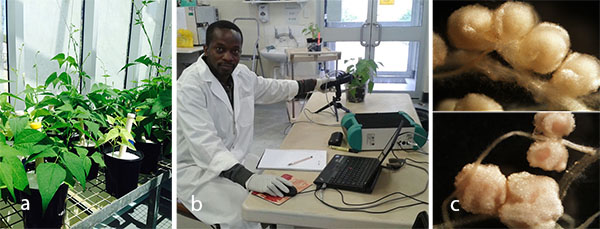
The aim of my study is to unravel the types, nature, genetic diversity and effectiveness of groundnut-nodulating rhizobia existing in different soil types of the moist; northern Guinea (NG) and dry; Sudan (S) savannas of Nigeria, with a view to identify strains that hold promise for improved symbiotic N2-fixation, productivity and soil fertility.

My research project has assessed the diversity and symbiotic effectiveness of bacteria nodulating beans in different agro-ecological zones in Kenya, developed a gene-marker system for rapid analysis of nodule occupancy and evaluated the effect of several factors, such as soil nitrogen, on strain nodule occupancy outcomes.

This special issue of the N2Africa Podcaster is devoted to updates from each of the PhD students being funded through N2Africa. Dr Amaral Chibeba from Mozambique is the only student to have completed his PhD so far, although we expect several more to complete in the coming months. Your comments and suggestions on the ongoing projects are most welcome.

Ken Giller

Earlier this month I had the privilege to visit N2Africa activities in the north of Uganda together with Peter Ebanyat (Uganda Country Coordinator), Aron Othieno (Field Liaison Officer) and Connetie Ayesiga (Business Development Officer). Together with World Vision Uganda, our major partner in the region, we visited a number of farmer groups and other stakeholders. N2Africa is working in this region with common beans, groundnut and soyabean. Farmers had a lot of common bean in their fields, largely as a food security crop.

It is with regret that we announce the demise of Dr David Icishahayo, who was a Lecturer in the Crop Science Department at the University of Zimbabwe. He passed away on 20 July 2016 at St Giles Medical Rehabilitation in Harare, where he was recovering after he had suffered a stroke three weeks earlier. David joined the University of Zimbabwe as a Research Assistant in 1999, having arrived in the country from Rwanda/Burundi as a refugee.